LGBTQ+ Elders & Families
Long-term care information, county data, and affirming resources for LGBTQ+ older adults, chosen family, and the people who care for them across Los Angeles County.

This page is for information and community advocacy only. It is not medical, legal, or financial advice, and it is not a substitute for emergency services. In an emergency, call 911. Statistics below are drawn from published research and county data (see sources at the end of the page); listed programs and contact details should be verified directly with each organization before you act on them.
The invisible crisis
Isolation is a long-term-care risk. For many LGBTQ+ elders, the caregiving buffer most people rely on simply is not there.
1 in 3
LGBTQ+ elders report having no one to care for them if they become seriously ill.
43%
of LA County LGBTQ+ adults 50+ live alone — versus 21% of non-LGBTQ+ adults 50+.
~2x
as likely as non-LGBTQ+ adults to report loneliness and to lack the support they need.
Why the gap exists
Fewer assets and fewer unpaid caregivers mean fewer choices. Affordability is the most commonly reported concern among LA County LGBTQ+ adults — roughly 35% live below 200% of the federal poverty level.
Lower lifetime earnings
Employment discrimination reduced pensions, employer accounts, and personal savings over a lifetime.
No spousal benefits before 2015
Same-sex couples lacked marriage-linked Social Security spousal and survivor benefits for decades.
Lower homeownership
Weaker retirement wealth and higher rates of drawing down savings earlier than planned.
Compounded inequity
Black and Hispanic LGBTQ+ older adults face greater poverty, food insecurity, and housing instability than white LGBTQ+ peers.
The gap is trust as much as capacity
In a foundational national study of LGBT older adults in long-term care, 89% believed staff would discriminate against LGBTQ+ elders, and 43% reported witnessing or experiencing mistreatment. Heterosexual and cisgender assumptions make identities, relationships, and health needs invisible.
Past discrimination
Harassment, denial of services, and hostile encounters accumulate over a lifetime of care.
Delayed care
People postpone or avoid services rather than risk another hostile encounter.
Identity concealment
Identity information is withheld, so records miss correct names, pronouns, and care needs.
re-closeting in care
Residents are cut off from affirming relationships exactly when they are most dependent.
Aging with HIV
Many long-term HIV survivors outlived the epidemic, but the aging system was not built for them. Aging with HIV means managing combinations of conditions — frailty and functional decline, cardiovascular disease and diabetes, osteoporosis, cognitive impairment, certain malignancies, and polypharmacy — not a single condition.
HIV stigma compounds with ageism, racism, and anti-LGBTQ+ bias in care settings. HIV care and geriatric care must be coordinated as one pathway, not two silos.
What LA County has — and what is missing
- Commission on HIV and DHSP needs assessments via town halls and focus groups.
- Ryan White Part A transitional case management standards for adults 50+.
- A 2027–2031 Integrated HIV Plan in development.
- No current countywide count of people 50+ living with HIV.
Your rights: California SB 219
The LGBT Long-Term Care Facility Residents’ Bill of Rights (enacted 2017) applies to skilled nursing facilities, intermediate care facilities, and residential care facilities for older people. It protects, among other things:
- No denial of admission based on sexual orientation, gender identity, or HIV status
- Respect for gender identity and correct name and pronouns
- Partner room-sharing rights
- Gender-consistent room and restroom access
- Protection against misuse of name or pronouns
- Required posting of nondiscrimination protections
Protections are strong on paper. In practice, they require visible enforcement, clear complaint pathways, trained staff, and resident confidence — cultural competency cannot be inferred from a nondiscrimination statement alone.
The packet, before the crisis
Documentation completed before a crisis is the single cheapest protection for chosen family. Without it, institutions default to biological next-of-kin — even when those relatives are estranged. California does not require one specific advance-directive form as long as statutory requirements are met.
Advance Health Care Directive
Names a health care agent (partner, friend, or chosen family); records CPR/ventilator preferences; documents correct name, pronouns, and gender-affirming care.
HIPAA Authorization
Lets chosen supporters receive medical information and participate in care decisions.
Facility Visitation Documentation
Protects access when institutions default to biological next-of-kin.
Financial / Durable Power of Attorney
Names who manages money and medical authority if capacity is lost.
Last Will & Trust / Estate Plan
Directs assets to chosen family rather than default kinship law or estranged relatives.
POLST
Turns treatment preferences into standing medical orders for emergency responders.
Hospice & Palliative Navigation
Screen providers on LGBTQ+ staff training, gender-affirming practice, and inclusive visitation.
Grief Support & Death Doula Access
Non-clinical companionship and peer bereavement support for chosen family who have no standing in law.
Digital Asset Planning
Accounts, records, and identity mapped and transferable to the named agent.
Affirming anchors in LA County
LA County has real LGBTQ+ elder capacity. The gap is not capacity — it is coordination and a unified, trusted pathway between these anchors.
LA LGBT Center — Senior Services (50+)
Case management, hot meals, housing assistance, technology access, community activities, and healthcare/employment navigation.
1118 N. McCadden Place · Mon–Fri, 9am–3pm · 323-860-5830 · [email protected]
LA County DMH GENESIS (60+)
Field-based outpatient mental health for homebound people with severe mental illness.
Eligibility and local enrollment must be confirmed.
In-Home Supportive Services (IHSS)
Publicly funded caregiving assistance for eligible residents.
Eligibility and local enrollment must be confirmed.
Community & training partners
SAGEConnect, SAGEYou, NAMI Greater Los Angeles County, San Gabriel Valley LGBTQ Center, Pasadena Village, and Ryan White Part A case management for adults 50+. SAGECare and the Long-Term Care Equality Index support provider cultural competency.
Contact information should be verified before acting.
Law Offices of R. Grace Rodriguez (LORGR)
WeCareLA partners with LORGR to connect LGBTQ+ elders and chosen families with experienced, affirming legal services — the exact protections outlined on this page.

Renay G. Rodriguez, Esq.
Attorney & Founder
Renay Grace Rodriguez is a California-licensed attorney and certified bankruptcy specialist whose practice in Chatsworth focuses on estate planning, probate, conservatorships, real estate, and bankruptcy. A passionate LGBTQ+ advocate, she serves as Treasurer for the National Stonewall Democrats and is an active delegate for the California Democratic Party. Her office is bilingual in English and Spanish.
Pacific Advisors / Guardian Life
Financial planning is part of long-term care planning. WeCareLA works with Christina M. Baldwin to help LGBTQ+ elders, chosen families, and business owners plan for the cost of care with affirming, judgment-free guidance.
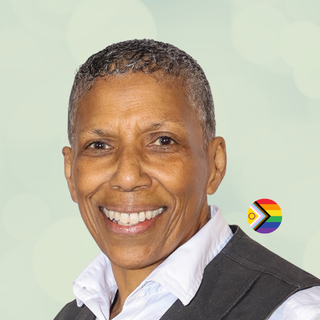
Christina M. Baldwin
Financial Services Partner — Licensed Financial Representative
Christina M. Baldwin is a Licensed Financial Representative for Guardian Life at Pacific Advisors in Beverly Hills, California (License #0L46746). Drawing on a diverse background spanning health and wellness, AI technology, and operations management, she brings her expertise to the long-term care and financial services space, with a focus on serving marginalized communities through shared knowledge and resources. Chris specializes in financial coaching, estate planning, long-term care, and insurance services for both individuals and business owners, and regularly hosts financial empowerment and estate planning seminars and workshops for schools and organizations.
Ask every hospice and care provider
- Do you provide LGBTQ+-specific staff training?
- Is gender-affirming care part of everyday practice?
- Do you recognize and include chosen family?
- Do you guarantee inclusive visitation policies?
- Do staff have experience with historical trauma?
How you can help build the network
Mutual aid — chosen family treated as care infrastructure — can connect, navigate, and advocate. Everyone has a role.
Community members
Join or start a mutual-aid pod, complete your own advance directive and name your agent in writing, and commit to one regular check-in with an elder in your neighborhood.
Financial & care professionals
Pledge pro bono hours, take LGBTQ+ cultural-competency training (e.g., SAGECare), and run advance-directive and estate clinics through trusted anchors.
Organizations & funders
Partner with WeCareLA to create LGBTQ+-affirming home-care pathways and fund navigation, provider vetting, and shared unmet-need tracking.
Want to talk about affirming care for yourself or someone you love? Reach out to our team or request an assessment. We are committed to LGBTQ+-affirming care and to recognizing chosen family. You can also browse providers we have screened and verified as affirming.
Are you a care provider? Every provider listed on wecarela.app must serve the LGBTQ+ community. Complete our provider screening questionnaire to be considered for our verified provider database.
Sources
- Williams Institute, UCLA School of Law — Communities of Resilience: The Lived Experiences of LGBTQ Adults in Los Angeles County (2023 LA County Health Survey & LELAC data, published June 2024).
- California Department of Aging — From Challenges to Resilience: LGBTQIA+ Older Adults Survey (2024); state resources for LGBTQ+ older adults.
- Justice in Aging (formerly NSCLC) — LGBT Older Adults in Long-Term Care Facilities: Stories from the Field (2011; updated 2015).
- California Senate Bill 219 — LGBTQ Long-Term Care Facility Residents' Bill of Rights (enacted 2017).
- LA County Department of Public Health, Division of HIV & STD Programs — HIV surveillance data and annual reports.
- Los Angeles LGBT Center — Senior Services — Programs, activities, and participation data (2025).
- SAGECare / SAGE (Services & Advocacy for LGBTQ+ Elders) — LGBTQ+ aging advocacy and cultural competency training program history.
Some figures are derived estimates or older findings that explain persistent distrust rather than current prevalence. Program details and contact information should be verified directly with each organization.
Affirming long-term care for LGBTQ+ elders and chosen family
Our care coordinators recognize chosen family and are committed to respectful, gender-affirming support. Reach out — no pressure, no obligation.